Home · Places · Digital Nomad Month in Sri Lanka: Work & Surf Base Guide
Trip plan · 18 October 2026
Digital Nomad Month in Sri Lanka: Work & Surf Base Guide
Cover photo: Jose Varghese (Flickr)
Who this is for
Remote workers staying a month or more. The formula that works: one coastal base, surf at dawn, deep work mid-day, weekend escapes. The Weligama–Ahangama strip is the island's surf-coworking heartland — coliving, cafés and breaks within one short tuk ride.
The month
- Week 1: Land in Weligama. Coliving (Outpost) or a guesthouse with fibre. Get a Dialog SIM at the airport — consistently the best coverage. Trial coworking day passes before committing monthly.
- Weeks 2–3: Routine — surf dawn, work 9–3, explore after. Weekend trips: Galle Fort, Hiriketiya, Udawalawe safari.
- Week 4: Ella workation week (cooler air, views, slower wifi — plan light meetings) or Arugam Bay in east season, then back to the coast.
Where to work
Outpost Weligama (rooftop, pool, social — around $13/day), Focus Hub Ahangama (around $6/day, friendly, good food), Hari Hari House Ahangama (beachfront, stunning but pricier), Colive Ahangama (desks in rooms, pool, bikes). Cafés with reliable wifi fill the gaps — the strip runs on flat whites and smoothie bowls now.
Places to snap pictures
- Weligama bay lineup at dawn — forty surfers scattered across a glassy bay.
- Coconut Tree Hill, Mirissa — your laptop-wallpaper run, 15 minutes away.
- Galle Fort lighthouse — weekend golden hour.
- Hiriketiya horseshoe from the headland — the whole bay in one drone-less frame.
- Your desk at golden hour — every nomad takes this photo; the light earns it.
Landmarks you'll actually remember
Honestly? The bay. Nomads remember routines, not monuments — but Galle Fort weekends and a Udawalawe safari break the screen-time blur.
Fun things to do
Dawn patrol surf (Weligama's beginner bay forgives daily practice), weekend safari, whale watching in season, Hiriketiya day trips, Galle Fort dinners, Ella highland weeks when the coast gets samey.
Favourites nomads name
The routine itself — surf, work, swim, repeat. And the community: the strip is dense enough that you'll know half the lineup by week three.
Practical notes
Power cuts happen — power bank plus a backup dongle, and pick accommodation with a generator for calls that matter. Most nomads work on tourist visas with extensions; a dedicated remote-work visa exists, so check current rules before banking on anything. Monthly math: coliving $400–800, café meals $3–6, scooter or tuk-tuk hire for the month beats daily haggling.
When to go
November–April for the south strip at its best — surf, sunsets, full community. May–October the nomad crowd thins and shifts east to Arugam Bay or up to Ella; Wi-Fi is island-wide now, so follow the surf or the cool air. Monsoon months mean cheaper rooms and emptier lineups if your work tolerates grey weeks.
Visa, honestly
Most nomads enter on a tourist ETA and extend — understand that remote work sits in a grey area everywhere, Sri Lanka included. A dedicated remote-work visa exists; read its current income and duration terms before committing a season to it. Never overstay: extension paperwork is routine, overstay fines and exit interviews are not.
Getting around monthly
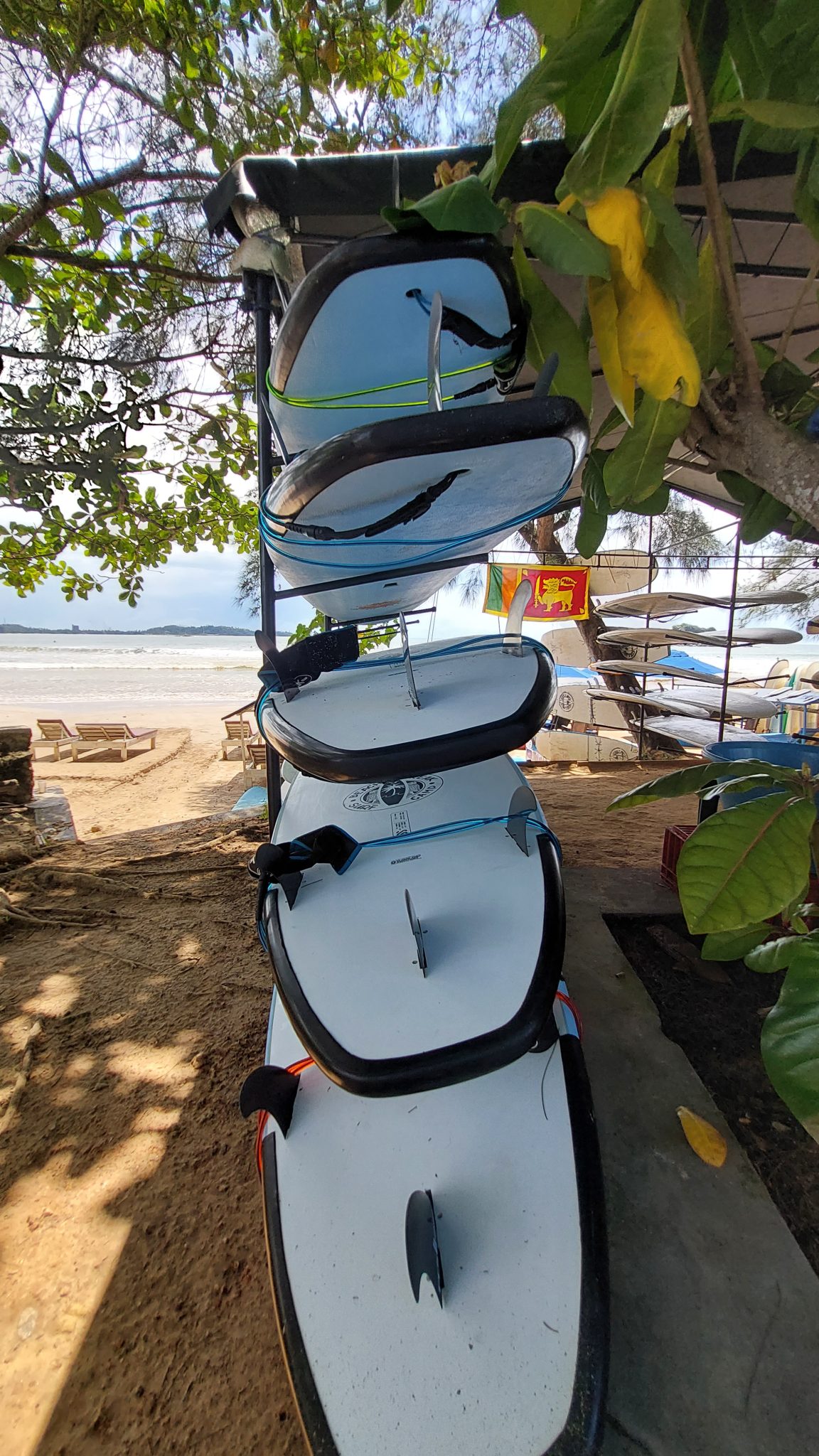
Monthly scooter rental is the nomad standard — but it needs a licence endorsement (same as cars), and most travel insurance excludes scooters unless you add it. No endorsement, no insurance, no scooter: use a bicycle (many colivings lend them) plus tuk-tuks. Surfboard racks rent monthly everywhere.
Where to stay monthly
Negotiate monthly directly — published rates assume short stays. Ask for photos of the desk and chair (your back will know the difference by week two), confirm backup power for calls, and trial one week before committing a month. Outpost and Colive for community; guesthouses for quiet and half the price.
What to eat on a working month
Café lunch deals ($3–6), fish markets for self-catered dinners, Weligama's roti shops for deadline days. Meal-prep Sundays with coliving mates cut the monthly food bill nearly in half.
Budget: a real month
Typical all-in: $900–1,800/month — coliving $400–800, food $300–500, scooter/transport $100–150, fun and weekends the rest. Frugal guesthouse living runs $600–900. Track week one spending honestly; lifestyle creep on smoothie bowls is the classic nomad budget leak.
Packing for a working month
Laptop that holds charge, a power bank that can charge the laptop (not just the phone), universal adapter, noise-cancelling earbuds for calls, dry bag for the board-and-laptop beach days, reef booties, unlocked phone for the Dialog SIM, and photocopies of everything in cloud storage. Leave the monitor — cowork spaces have them.
Work setup that survives
Cowork day-passes beat café-hopping for call-heavy days. EU overlap is easy (your afternoons); US overlap means night calls — decide before you commit. Ask every stay two questions: backup power, and actual (not advertised) Mbps at 7pm. Carry a power bank that can charge a laptop, not just a phone.
Health: the nomad risks
Reef cuts (booties, clean and cover same-day), scooter accidents (helmet always, insurance that names scooters), dengue routine, and burnout disguised as paradise — take one full day off screens weekly or the month blurs into one long shift.
Book before you fly
The first week only. Scout beds, boards, bandwidth and vibe in person, then commit monthly. Everything else — Ella weeks, safari weekends, Arugam Bay season swaps — books itself once you're in the community chat.
Places: weligama, ahangama, mirissa, galle, ella, hiriketiya
Keep exploring
New guides twice a week: beaches, costs, routes and honest local truth.
Comments & tips